
4041 Highway 90 Pace, FL 32571
What Is Teeth Grinding and Clenching
Bruxism is the clinical term for habitual teeth grinding or clenching, and it affects a significant portion of the adult population. Most people who grind their teeth do so during sleep, making it difficult to detect without a dental examination. In some cases, grinding also occurs during waking hours in response to stress or concentration.
The forces generated by grinding and clenching far exceed those of normal chewing. Over time, this places enormous stress on the teeth, jaw muscles, and temporomandibular joints. Without intervention, bruxism can lead to cracked teeth, worn enamel, damaged restorations, chronic jaw pain, and even tooth loss.
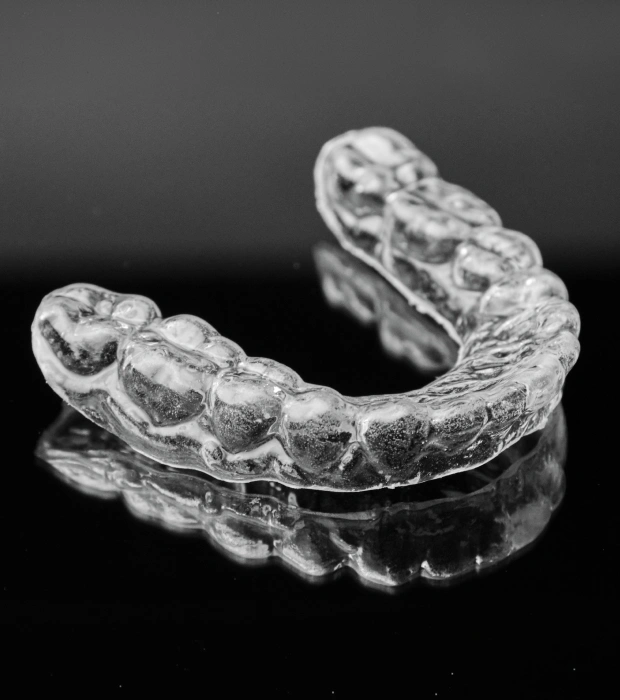
A night guard is a removable oral appliance worn over the upper or lower teeth during sleep. It acts as a protective barrier between the upper and lower arches, absorbing and redistributing the forces of grinding and clenching so your teeth do not bear the impact directly.
Book Your Visit
Signs You May Be Grinding Your Teeth
Because bruxism most often occurs during sleep, many patients are unaware of it until damage has already begun. Common signs include:
- Waking up with jaw soreness, facial pain, or headaches
- Teeth that appear flattened, chipped, or worn down
- Increased tooth sensitivity, particularly to temperature
- Tight or tired jaw muscles in the morning
- Earaches or pain around the temples
- Indentations on the tongue or cheek tissue
- A partner noticing grinding sounds during the night
- Cracked or fractured teeth with no clear cause
If you recognize any of these symptoms, a visit to our Pace, FL, office can help determine whether bruxism is the cause and whether a night guard is the right solution for you.
Getting Your Night Guard at Advanced Dental Concepts
The process is straightforward and completed over two appointments.
Evaluation
We examine your teeth for signs of wear, assess your bite and jaw function, and discuss your symptoms in detail. This helps us confirm that bruxism is the underlying cause and determine the appropriate type of night guard for your needs.
1
Impressions
We take precise impressions of your teeth, which are sent to a dental laboratory where your custom night guard is fabricated from durable, high-quality materials.
2
Fitting
When your night guard is ready, you return to our office for a fitting. We check the fit, make any necessary adjustments, and walk you through how to wear and care for it properly.
3
Ongoing Monitoring
We monitor the condition of your night guard and your teeth at your regular visits to ensure continued protection and address any changes in your bite or jaw function over time.
4
What Happens If Bruxism Goes Untreated
Ignoring teeth grinding rarely leads to improvement on its own. Without protection, the consequences can become increasingly serious and costly to address:
- Enamel does not grow back once it has been worn away
- Cracked or fractured teeth may require crowns, root canals, or extraction
- Damaged fillings, crowns, and veneers will need premature replacement
- Chronic jaw pain and TMJ dysfunction can develop or worsen
- Bone loss and gum recession may occur in severe cases
A custom night guard is one of the most cost-effective investments you can make in your long-term dental health. Protecting your teeth now is far simpler and less expensive than restoring them later.
Protect Your Smile While You Sleep
If jaw pain, worn teeth, or morning headaches have become part of your routine, a custom night guard may be exactly what you need. Contact Advanced Dental Concepts in Pace, FL, to schedule your evaluation today.
Schedule a Consultation